


When Productivity Extensions Become Attack Platforms: The Hidden Risk of Malicious Browser Extensions
News | 05.10.2026
Browser extensions have become an increasingly attractive attack vector because they operate inside a trusted application — the user's browser. Unlike conventional malware that requires a separate installation and execution environment, a malicious extension can gain access to browsing activity and remain active as long as it is installed.
Research by LayerX, now part of Akamai, uncovered a coordinated campaign involving 32 malicious browser extensions that collectively affected more than 6,150 users. The extensions were distributed through the Google Chrome Web Store and Microsoft Edge Add-ons Store and were presented as legitimate productivity tools.
Their advertised functionality included text utilities, YouTube enhancements, SEO tools, note-taking applications, language assistants, Markdown utilities, and other browser conveniences.
Despite their different names, branding, and stated purposes, the extensions shared significant technical similarities. Researchers identified common infrastructure, highly similar background service workers, shared telemetry mechanisms, and remotely controlled configuration.
These findings indicate that the extensions were likely created using a common development framework and operated as part of a coordinated campaign.
At a Glance
- 32 malicious browser extensions were identified across the Chrome Web Store and Microsoft Edge Add-ons Store.
- The campaign affected more than 6,150 users.
- The extensions masqueraded as legitimate productivity and browser-enhancement tools.
- Most variants shared highly similar code, infrastructure, telemetry, and storage mechanisms.
- Remote configuration allowed operators to change extension behavior without publishing a new browser-store version.
- The extensions monitored browsing activity and could manipulate navigation based on attacker-controlled rules.
- A separate cluster linked to the same publisher account was involved in affiliate fraud.
From Productivity Tools to Remote-Controlled Platforms
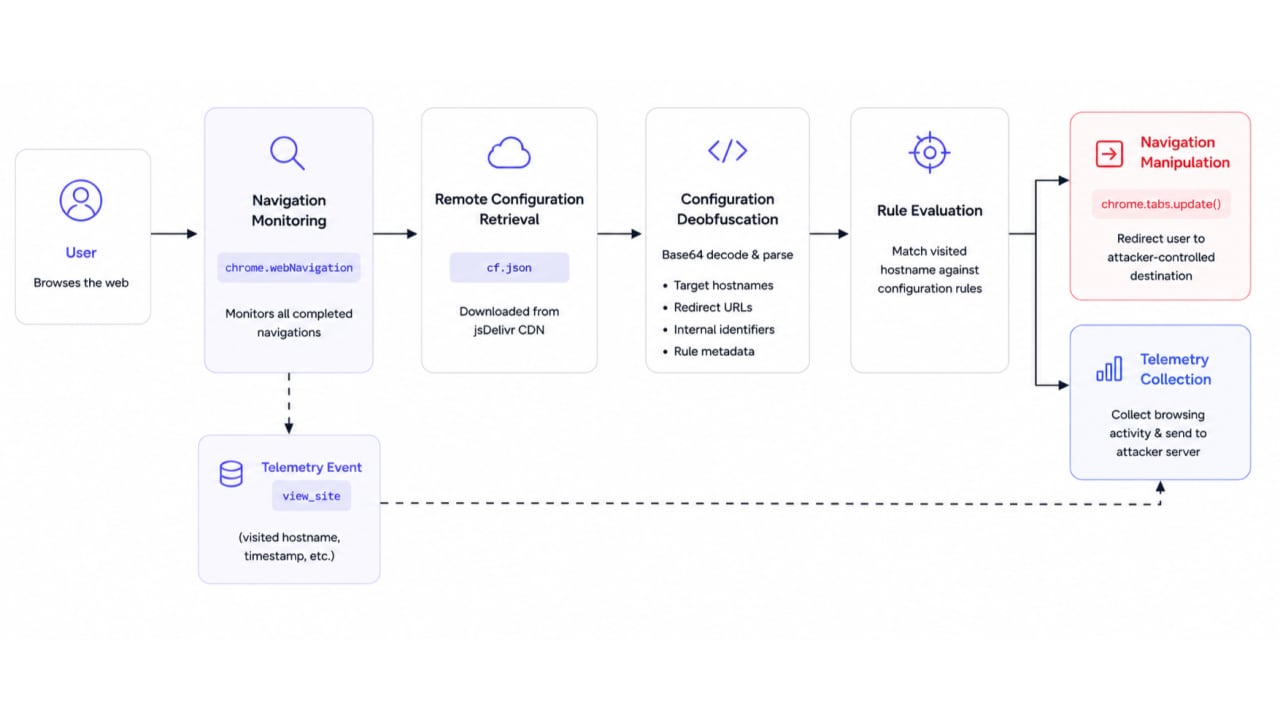
The most concerning aspect of the campaign is not simply that the extensions were malicious. It is the architecture used to operate them.
Analysis showed that most extensions could:
- Continuously monitor browsing activity
- Retrieve configuration from remote infrastructure
- Decode and cache configuration locally
- Determine which websites should trigger specific actions
- Use highly similar background service workers
- Share telemetry and storage mechanisms
- Dynamically modify browser navigation
This architecture effectively transformed seemingly simple browser extensions into remotely managed platforms.
The operators did not need to publish a new extension every time they wanted to change its behavior. Instead, they could modify the remote configuration that the extensions periodically retrieved.
This creates a significant security challenge: the behavior observed during an initial security review may not remain the same over time.
While the researchers primarily observed browsing telemetry collection and traffic manipulation, the same infrastructure could potentially be adapted for other purposes, including phishing, credential theft, malicious redirects, or malware delivery.
A Campaign Hidden Behind Legitimate-Looking Extensions
The extensions were deliberately presented as unrelated productivity applications.
Researchers identified tools resembling:
- Text and character counters
- Markdown utilities
- YouTube enhancements
- Video speed controllers
- SEO tools
- Language assistants
- Note-taking applications
- Scrolling utilities
- AI-related browser helpers
Individually, none of these extensions necessarily appeared remarkable. Each had its own branding and advertised functionality.
The broader campaign became visible only when researchers correlated multiple indicators, including publisher information, code similarity, remote infrastructure, and runtime behavior.
This is an important lesson for organizations: malicious browser extensions cannot always be evaluated effectively based on their advertised functionality or store presence alone.
A Campaign Designed to Evolve
The earliest extensions associated with the campaign appeared in March 2025, with additional variants published over the following months.
Rather than repeatedly updating the same extension, the operators introduced new extensions based on the same underlying framework.
This approach provides several advantages to an attacker:
- A new extension can appear unrelated to previously identified campaigns.
- Individual extensions may have relatively small user bases.
- Security researchers must correlate multiple applications to identify common infrastructure.
- Remote configuration can change behavior without requiring a new store submission.
The result is an attack ecosystem that can remain difficult to identify even when individual components appear relatively low-risk.
Campaign Structure and Impact
| Characteristic | Finding |
|---|---|
| Malicious extensions | 32 |
| Affected users | More than 6,150 |
| Distribution channels | Google Chrome Web Store and Microsoft Edge Add-ons Store |
| Campaign activity | Active since March 2025 |
| Primary techniques | Remote configuration, browser monitoring, configuration obfuscation, dynamic navigation manipulation |
How the Remote-Control Architecture Works
The shared codebase identified by LayerX researchers contained several capabilities that were consistently observed across the campaign.
1. Remote Configuration and Command-and-Control
Rather than embedding all operational logic directly inside the extension, many variants retrieved configuration from the same remote infrastructure.
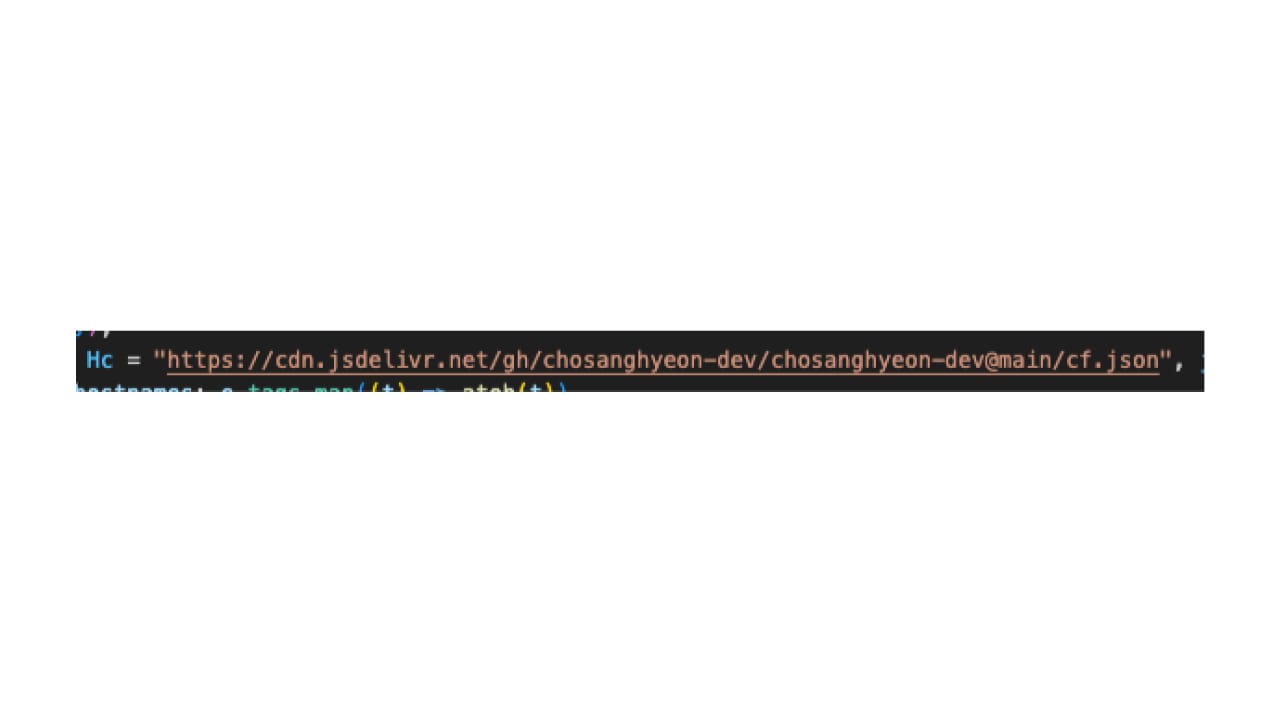
The configuration was downloaded and cached locally before being used by the extension:
await chrome.storage.session.set({
    nav_cfg_cache: parsedConfig
});
This architecture separates the extension itself from the operational instructions controlling it.
That distinction is important. Browser-store security controls primarily evaluate the extension package submitted by the developer. When critical behavior is controlled remotely, attackers can potentially change targeting rules, redirect destinations, and campaign logic without changing the extension package itself.
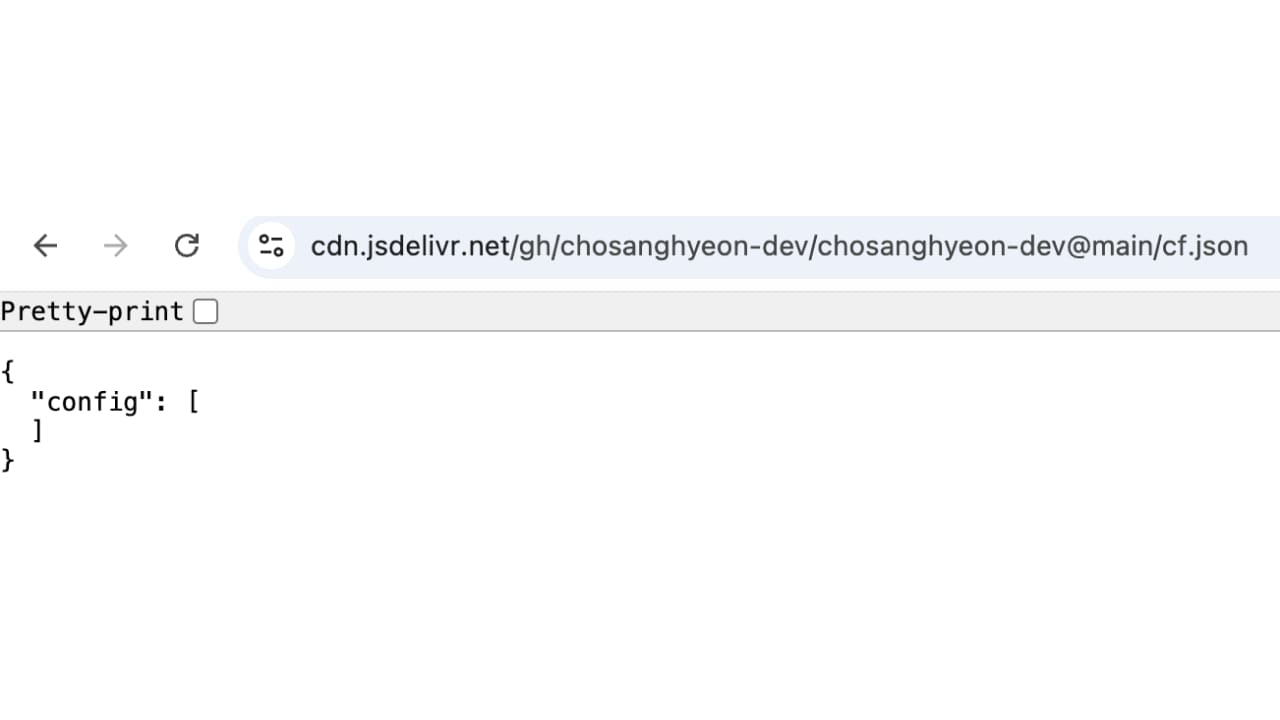
During the investigation, researchers observed changes to the remote configuration, including periods when it was empty.
Several days later, the configuration contained rules for affiliate traffic redirection.
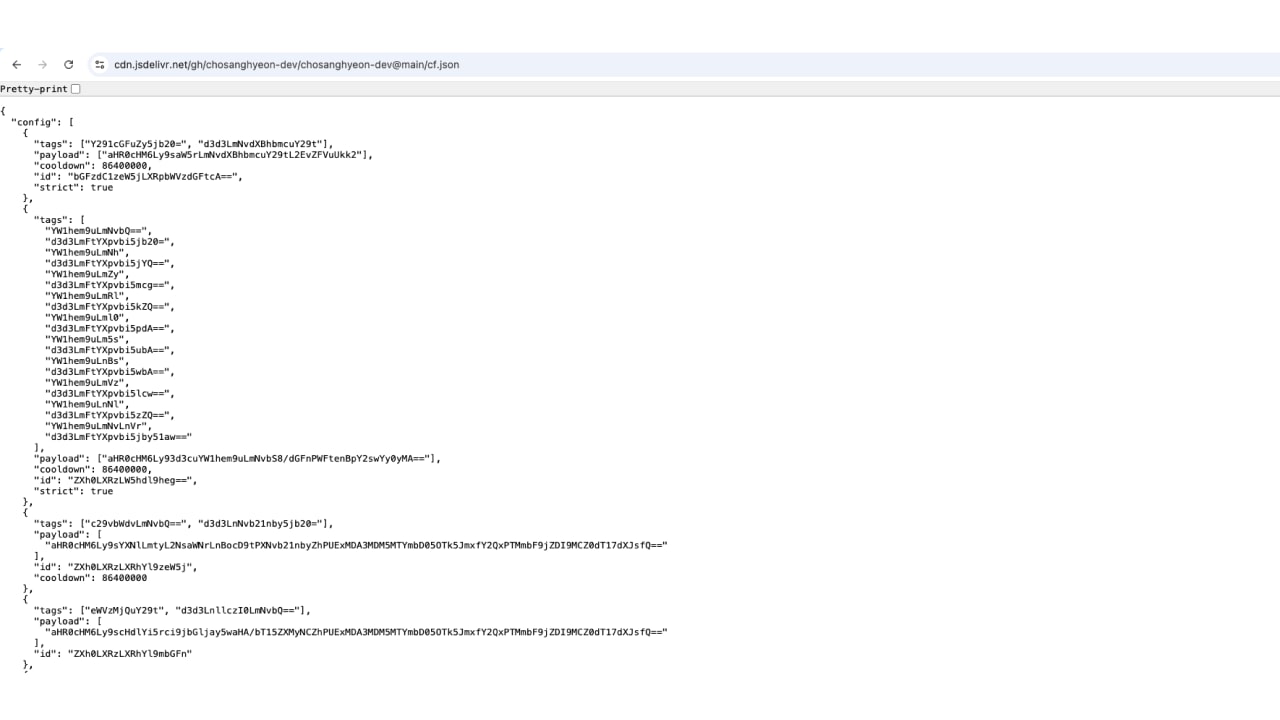
This demonstrates how the campaign could dynamically change its behavior after deployment.
2. Configuration Obfuscation
The remote configuration did not expose all values in plain text. Hostnames, redirect information, and internal identifiers were encoded using Base64 and reconstructed during runtime.
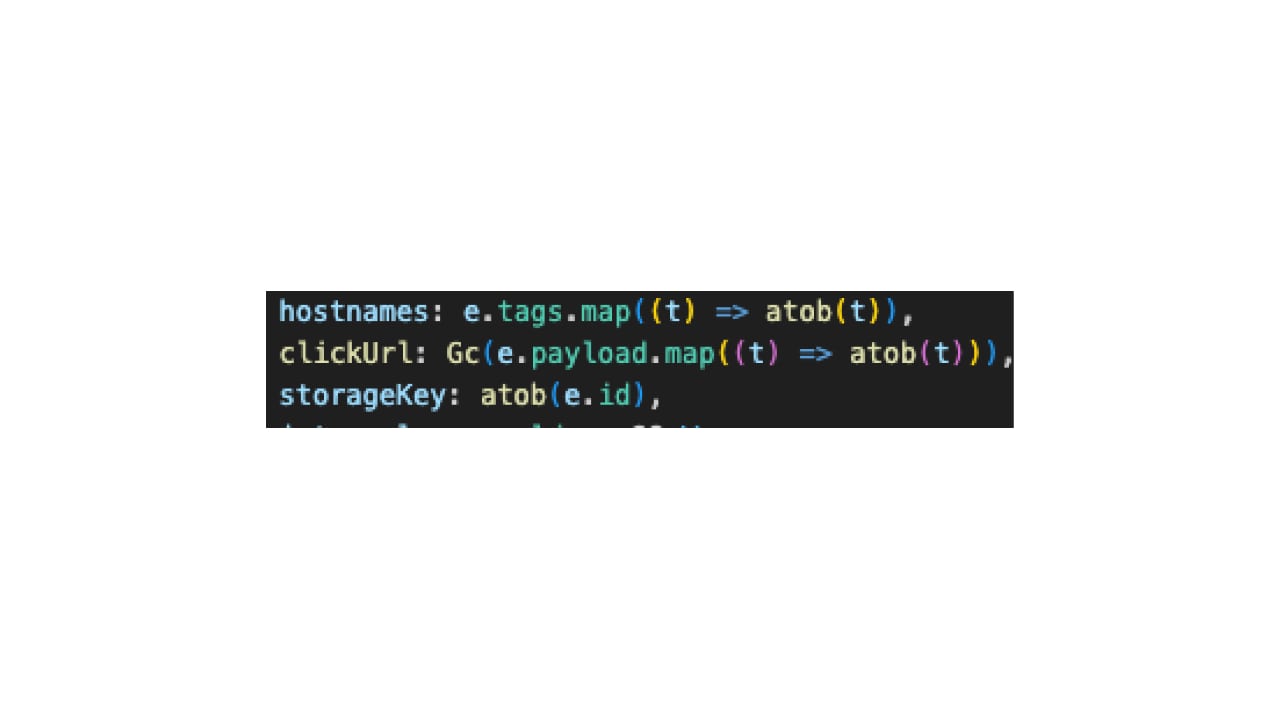
Base64 is not encryption and does not provide meaningful confidentiality. However, it can make manual analysis and basic static inspection more difficult by concealing important values until runtime.
Once decoded, these values were used to construct navigation rules.
3. Continuous Browsing Monitoring
The extensions also monitored browser navigation through the webNavigation API.
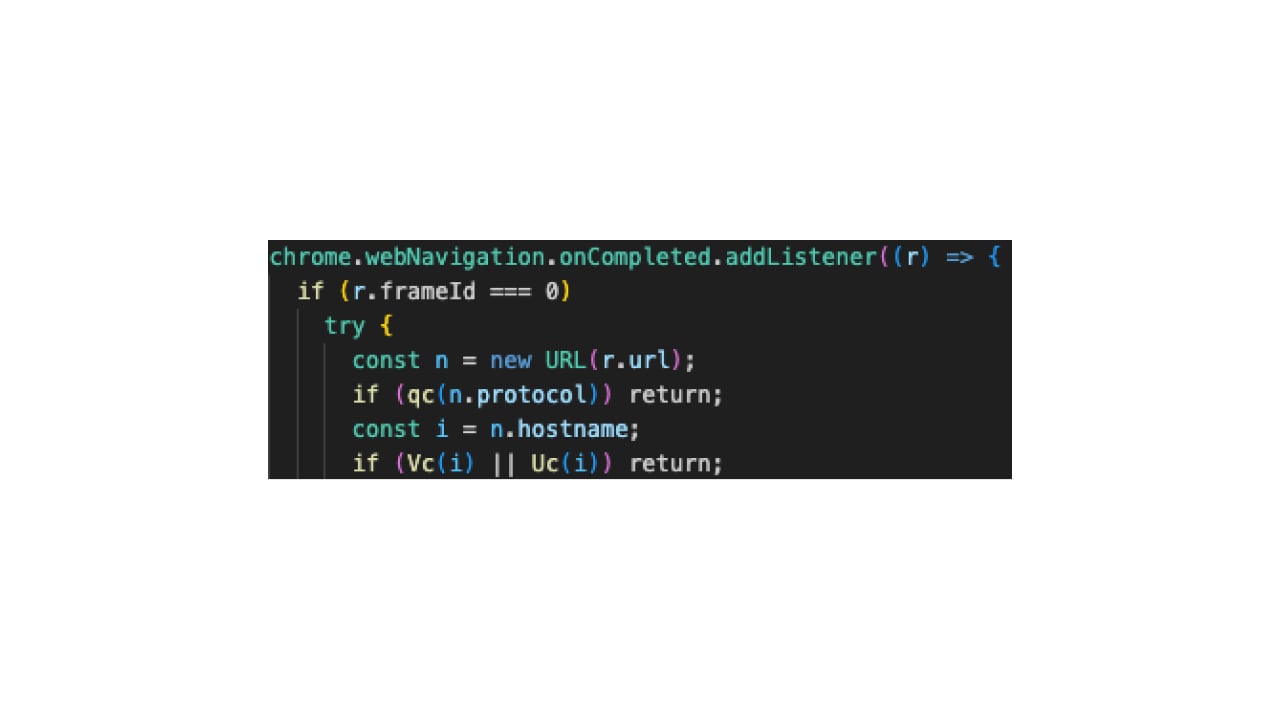
Because navigation events were processed continuously, the extensions could observe browsing activity regardless of whether a visited website was directly related to the advertised purpose of the extension.
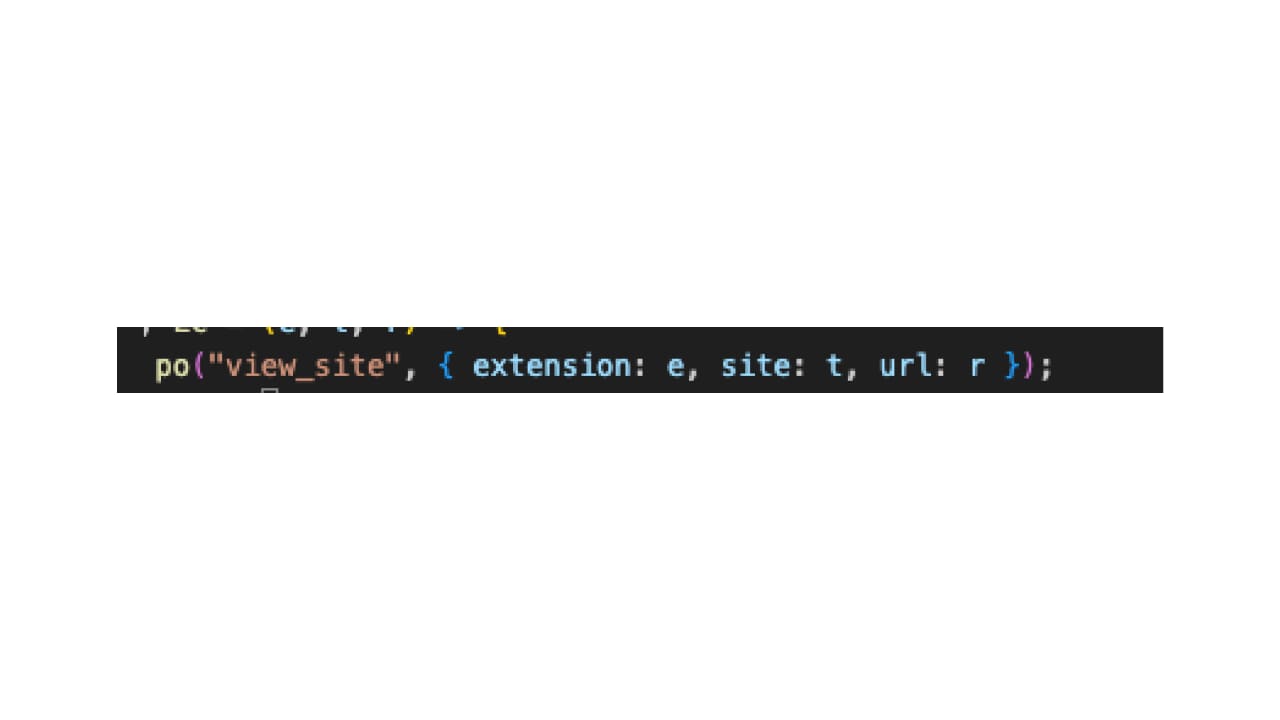
This creates an important privacy and security concern: a user may install what appears to be a simple productivity utility while granting it visibility into their broader browsing activity.
4. Remote-Controlled Navigation Manipulation
When a visited hostname matched a rule supplied through the remote configuration, the extension could use browser APIs to modify the active tab.
The destination was reconstructed dynamically rather than being permanently embedded into the extension.
This means that operators could change redirect targets without publishing a new version through the browser extension marketplace.
For defenders, this makes traditional static analysis less reliable because the malicious behavior may depend on external infrastructure and can change after deployment.
Attribution Indicators
Attribution remains difficult, but researchers identified several indicators pointing toward a Korean-speaking threat actor, whether an individual or an organized group.
Observed indicators included:
- Korean-language identifiers in the code
- Korean localization resources
- Korean comments and development artifacts
- Korean shopping services used by the affiliate-fraud cluster
The strongest technical connections across the campaign were the shared remote configuration infrastructure and highly similar implementations of the background service worker.
The combination of reused code, infrastructure, telemetry, and storage design strongly suggests centralized development rather than a collection of unrelated extension developers.
A Second Monetization Strategy: Affiliate Fraud
The investigation also uncovered another cluster of malicious extensions published under the same publisher account.
At the time of analysis, these extensions primarily appeared to support affiliate fraud by automatically redirecting users through affiliate links and generating unauthorized commissions.
This finding highlights another important characteristic of modern browser-extension campaigns: the same underlying infrastructure can potentially support multiple objectives.
An extension ecosystem can be used for monetization today and repurposed for more aggressive attacks tomorrow.
Why Remote Configuration Changes the Risk Model
Traditional security analysis often focuses on what an application contains at the time it is reviewed.
Remote configuration introduces another dimension: what the application can become later.
A browser extension may initially:
- Request apparently reasonable permissions
- Provide legitimate-looking functionality
- Pass marketplace review
- Have positive user feedback
- Contain no obvious malicious payload
Yet its behavior can later be modified through external configuration.
For organizations, this means browser-extension security should not be treated solely as an application-store problem. It should also be considered part of the broader browser and endpoint security strategy.
Protecting the Enterprise Browser
Browser extensions can access sensitive information, observe user activity, interact with websites, and potentially influence navigation. In enterprise environments, uncontrolled extensions therefore represent an important part of the browser attack surface.
Organizations should consider a layered approach that includes:
- Maintaining visibility into installed browser extensions
- Identifying extensions with excessive permissions
- Monitoring extension behavior rather than relying solely on reputation
- Restricting unauthorized extensions
- Reviewing extensions that communicate with external infrastructure
- Detecting suspicious browsing and navigation activity
- Continuously reassessing extension risk after deployment
- Integrating browser telemetry with broader security monitoring
The objective is not necessarily to eliminate browser extensions. Many are valuable productivity tools. Instead, organizations should establish sufficient visibility and control to distinguish legitimate functionality from potentially malicious behavior.
The Broader Security Lesson
This campaign illustrates a broader trend in modern cybersecurity: attackers are increasingly building flexible platforms instead of one-time malware.
By separating the extension from its operational configuration, threat actors can maintain a persistent presence while changing targeting and functionality remotely.
The same principle can be seen across other parts of the threat landscape, where attackers increasingly rely on cloud infrastructure, dynamic configuration, automation, and modular components.
For security teams, this means that detection cannot depend exclusively on static indicators. Effective defense increasingly requires visibility into behavior, infrastructure, communication patterns, and changes over time.
Conclusion
The LayerX research demonstrates how seemingly harmless browser extensions can evolve into remotely managed attack platforms.
The campaign involved 32 extensions affecting more than 6,150 users, yet its most significant characteristic was the common architecture connecting seemingly unrelated applications. Shared code, remote configuration, browsing monitoring, and dynamic navigation control allowed the operators to maintain and modify the campaign without repeatedly publishing new malicious versions.
For enterprises, the lesson is clear: browser extensions should be treated as part of the security attack surface, not simply as productivity software.
Organizations need continuous visibility into what extensions are installed, what they can access, where they communicate, and how their behavior changes over time.
As browser-based work continues to expand, securing the browser — and the applications and extensions running inside it — becomes an increasingly important part of protecting users, data, and enterprise applications.
Strengthen Your Browser Security Strategy with Akamai
Softprom is an official Akamai distributor. We help organizations evaluate their security posture and identify technologies that can improve visibility and protection against evolving web-based threats.
Contact Softprom to discuss how Akamai security solutions can support your organization's broader web and application security strategy.
Share:


